

Generative AI and OCR applications: A new standard that improves invoice extraction accuracy to over 95%.

1. Strategic Vision: Financial Automation in the AI Era
In the digital transformation roadmap of businesses using SAP, the Accounts Payable process is undergoing a pivotal shift: from mere "data digitization" to "intelligent automation." The combination of Generative AI and OCR is not just a technical upgrade but a comprehensive AI-First architecture. As solution experts, we affirm that this is a key element in transforming the accounting department from manual data entry tasks to a strategic management role, helping businesses optimize cash flow and resources.
Besides operational pressures, compliance with legal regulations such as Official Letter 1152/TCT-CS is mandatory. This regulation emphasizes that XML files are the legal basis for original documents and requires businesses to verify the taxpayer's status in real time. Modern AI technology not only extracts data but also ensures the integrity of the authentication process, thoroughly addressing legal risks before data is recorded in the core system. However, to realize this vision, businesses need to frankly acknowledge inherent "bottlenecks."
2. Current Situation Analysis: Bottlenecks in Traditional Invoice Processing
From a system architecture perspective, maintaining manual invoice processing or using outdated OCR creates serious data breaks between input invoices and the SAP ERP system. Businesses that have not adopted C.Invoice often face the following operational risks:
-
Operational bottlenecks: Large invoice volumes (especially during closing periods) put immense pressure on staffing levels (FTE), prolonging payment cycles and impacting the DPO (Days Payable Outstanding) metric.
-
Compliance Risk: The lack of an automated mechanism for checking taxpayer status on the General Department of Taxation's (GDT) portal and the difficulty in storing the original XML file for 10 years as required by regulations pose a risk of expense disallowance during tax settlement.
-
Data Discrepancies: The high rate of manual data entry errors leads to discrepancies between Invoice - Purchase Order - Gross Receipt, hindering reconciliation and reducing the transparency of financial reporting.
The shift to a solution capable of "reading" data like a human but at the speed of machines is a pressing requirement to overcome these barriers.
3. Breakthrough Synergy: When Traditional OCR Combines with Generative AI
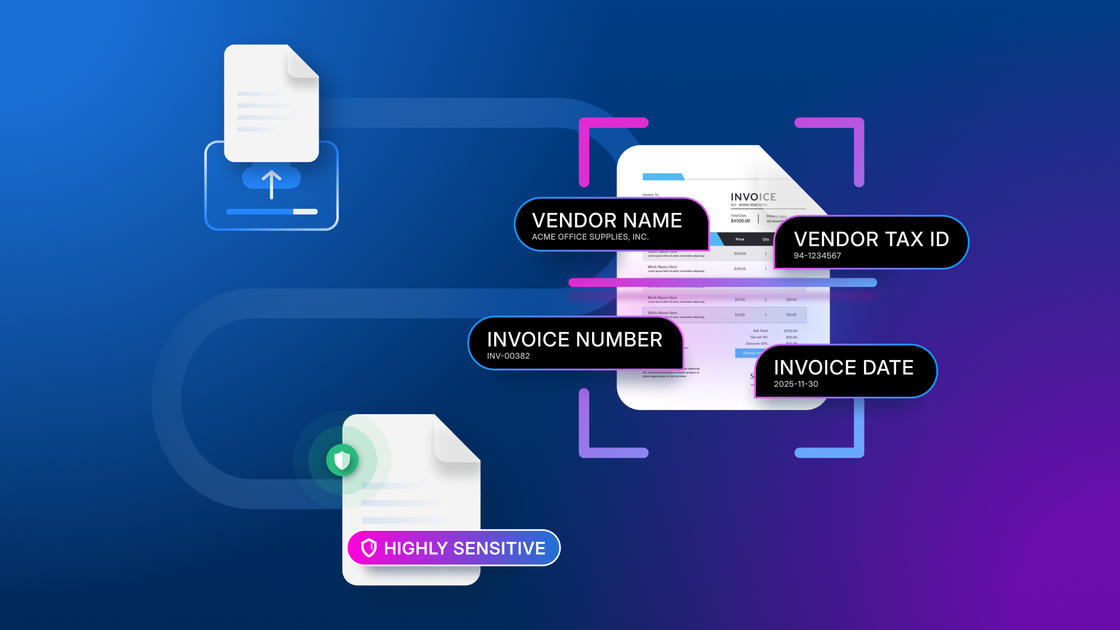
The C.Invoice platform redefines data extraction standards by integrating Generative AI into its OCR core. Instead of just recognizing characters (Pattern Matching), the system has the ability to understand the context and flexible structure of the document (Semantic Understanding), helping to achieve over 95% accuracy even with complex or blurry invoices.
The difference between C.Invoice's Enterprise-Ready system and traditional OCR:
| Features | Traditional OCR | AI-Powered OCR (C.Invoice) |
|---|---|---|
| Reading Comprehension | Based on rigid templates, prone to errors when the layout changes. | Understands context and invoice structure flexibly thanks to GenAI. |
| Accuracy | Low when documents are of poor quality (blurred, misaligned). | Achieves over 95% thanks to self-learning and multi-mode processing capabilities. |
| Exception Handling | Requires 100% human intervention for manual editing. | Automatic suggestion of handling based on historical data and business logic. |
| Security & Compliance | Discrete storage, lack of in-depth encryption mechanisms. | XML storage for 10+ years, AES-256 encryption and TLS connectivity. |
This technology is the core foundation for C.Invoice to operate a closed-loop "End-to-End" process, ensuring clean data before pushing it to SAP.
4. C.Invoice Process: From Smart Receipt to 3-Way Matching
The advantage of C.Invoice lies in its ability to bi-directional data synchronization with the SAP backend via RFC or OData protocols. The process is designed according to a strict 8-step standard:
-
Automatic Collection: The system continuously scans emails (API-based), automatically collecting XML/PDF and classifying the status within 5 minutes.
-
Intelligent Classification: Automatically identifies invoice type (Goods, Expenses, Services) and checks for duplicates based on the supplier's tax code and invoice number.
-
GenAI/OCR Extraction: Extracts details down to each line item, tax information, and buyer/seller information with optimal accuracy.
-
Business Validation: Verifys the logical calculation (Pre-tax Amount + Tax = Total Amount) and the integrity of the digital signature.
-
Taxpayer Verification & Screenshotting: Real-time lookup on the GDT portal for invoice validity and status.
More Articles
Continue reading with these related posts

 prisma-ai
The Power of Hybrid Search: Combining Vector and Full-text Search
Discover Hybrid Search technology in Prisma AI - the perfect combination of Vector Search and Full-text Search with RRF algorithm to ensure optimal accuracy when retrieving information.


Never miss our latest insights
Subscribe to our newsletter and get the latest AI, data engineering, and tech insights delivered directly to your inbox.
We respect your privacy. Unsubscribe at any time.